In July we get Core Set 2020, and along with that - the London Mulligan.
The rules on Mulligans have changed greatly over the years. Back in the day, the way it worked was that if you had all lands, or no lands in your opening hand, you could reveal it, shuffle and draw 7 again. Now, not only did this not allow you to dump poor hands that still had a land or two, in formats like Legacy and Vintage, there were Combo decks which could abuse this. When you have a deck called “Oops All Spells”, it’s pretty easy to hit a hand with no Lands, LOL. The longest running Mulligan rule we had was the Paris rule, where you’d Mulligan down one card each turn. This was accidentally adopted at PT Paris in 1997, because Wizards neglected to take it out of the player’s information for the event. In 2015 we adopted the Vancouver Mulligan, where you got to Scry after you kept.
Now, we have a new system coming, and the wording of the rules can be a little confusing, but it basically works this way. Each time you Mulligan, you draw 7 new cards. Then after you decide to keep, you no longer get to Scry, but you put cards from your hand onto the bottom of your library (in any order), so you actually start with the same number of cards you’d have with the old Paris and Vancouver systems. So if you -
Mulligan once, you put one card on the bottom, and start with six.
Mulligan twice, you put two cards on the bottom, and start with five.
Mulligan thrice, you put three cards on the bottom, and start with four.
Etc… So what does all this mean for Arena players? Basically, all good stuff. By digging one card deeper each time you Mulligan, you’re getting more card selection. You’re increasing your odds of getting a playable starting hand. This will mean fewer non-games from having to keep a mediocre Mulligan.
I have some concerns about how the London Mulligan may impact formats like Legacy, Vintage, and maybe Commander. It seems possible that it will favor Combo decks, which rely much more heavily on getting a good opening hand, and in some cases, can even pull off a turn 1 win with the right combination of just a few cards. But, Wizards has been testing it extensively on MTGO (Magic the Gathering Online), and so far the data doesn’t seem to indicate any major problems.
One pitfall you should watch out for - just because Mulligans are going to be a little more forgiving, that doesn’t mean you should Mulligan more aggressively, or Mulligan hands you might have kept under the old system. The card disadvantage from tossing your first opening hand is still a huge detriment. I believe that the London Mulligan is a welcome improvement to Magic, and especially to Arena. It’s going to allow us all to just play more Magic, and that is always a good thing. I’m Tweeting now @23rdPlayable. I’m also occasionally streaming on Twitch as 23rdPlayable. And, as always, you can find me on Facebook in the MTG Arena Players group, where I’m a mod. Have fun, Play on, and Be kind to one another.
With Modern Horizons on…. well, on the horizon, some of you may take an interest in the Modern format. But maybe it’s always seemed like you could never afford to buy into it. Aren’t decks like hundreds or thousands of dollars?
Well, yes and no. It’s true that if you want get the cash to buy into one of the very best, highly competitive, Tier 1 decks, you’ll probably have to sell your kidneys on eBay. But all is not lost. Modern is a wildly diverse format, and almost anything goes for decks you can play. I’m going to give you some tips on how to make decks more affordable, and I’ll finish with an example of a truly budget build. Granted, you won’t be taking down a Mythic Championship, but you won’t get completely run over, either. Mana, Mana, mo Mana Much like in real life, one of the biggest money pits in Modern is the land. One good strategy here is to play a mono-colored deck, and there are a ton of classic archetypes available. However, if you really just need to go 2+ colors, you have some options. As an aside, multicolor lands that produce Blue tend to be higher in price than the others in any given cycle. So you may want to keep that in mind when designing or selecting a deck. Despite some recent reprints, Fetch lands - especially the Zendikar fetches are frightfully expensive, with some being almost $100 each.
The Shock lands are much more reasonable these days, thanks to heavy printing in the three Ravnica blocks. They’re sitting anywhere from $8-$15, but even that’s a bit too much for a true budget build.
The Check lands (or Buddy lands) are also quite good. They’ll very frequently enter untapped, and they’re fairly inexpensive at around $3-$5. But we can do better.
A good place to start to really go budget is with the Pain lands. These were the old go-to Rare duals before the Shock lands were printed (well, besides the OG Alpha Duals). They tap for colorless, and can tap for two colors, but deal 1 damage to you in the process. They’re super cheap, often just a dollar or two apiece because of frequent printings and low demand.
Another good set of lands are the Scry lands, or Temples from Theros. They enter tapped, but they Scry when they enter, so if you don’t need fast Mana, there’s some value add there. These are sometimes fairly cheap, but sometimes more around the price of the Check lands. It depends entirely on which one you’re buying. If you want to go super-budget for your color fixing, there are a huge number of dual-color common lands that enter tapped. Almost every set or block has a cycle of them. You don’t get the scry, but if you’re playing a slower deck, these can still work in a pinch.
And then there’s the Slow lands. This is a pair of cycles of lands from Tempest and Kamigawa that enter untapped, tap normally for colorless, and can be tapped for color, except they won’t untap on your next turn. They aren’t great, but they work and they’re pennies each. There are also a whole bunch of different cycles and styles of color fixing lands available at Common and Uncommon, like the “Tainted” lands, that tap for colorless, or two colors (one of which is always black) if you control a Swamp, or the “Vivid” lands, that enter with charge counters which you can spend for colored mana. I highly encourage you hop onto the Gatherer and brows through the “land” card type. You may find something there that peaks your interest :) Tribal Tats Tribes can definitely be your friend when looking to budget build. In Magic, “Tribe” basically just means making all the creatures in your deck the same type, and it’s very popular among Magic players. So much so, that people were building tribes before they were actually supported by the creatures in the game in any meaningful way. One great boon that budget Tribal decks just got is Unclaimed Territory from Ixalan. You name a creature type when it enters, and then you can use it for any color to cast creatures of that type, and it’s under $2.
The more famous Modern Tribes, like Elves, Humans, Spirits and Merfolk are great decks, but can be prohibitively expensive to build. Fortunately, there’s literally dozens of others to choose from. You can go budget Humans - since they’ve been in the game since Alpha. Werewolves, Vampires, Ninjas, Snakes, Kor, and so many more. You can also go with the creature “class” and build Tribal (in Magic, creatures generally have a “race” like human, and a “class” like wizard). There’s Artificers, Rebels, Wizards, Pirates (which just got a HUGE boon in Ixalan), Allies, Barbarians, Warriors, and - as with races - so many more. Stick with the Classics As I mentioned in regards to mono-colored decks, there’s a bunch of classic decks that you can look to for budget builds. White Weenie (a “swarm” style deck, nothing but small, white creatures), and Burn (erm - do I really need to explain how Burn works :) ) come immediately to mind. They both have been historically viable decks, with low cost to entry points. In fact, right now (as I’m writing this) you could pick up the mono-White Challenger deck, and have the foundation for a decent White Weenie deck. With a few little, and inexpensive upgrades, like Glorious Anthem, or Thraben Inspector, you can really amp up its power.
None of that Digital crap for me Another strategy for lowering the cost of a deck is to look for analogs to more powerful cards. The favored Black discard spells in Legacy are Inquisition of Kozilek and Thoughtseize. However, in a pinch, you could sub in cards like Duress, and Despise. Can’t afford Fatal Push and Dismember? Well there’s tons of cheap, Black removal with Doom Blade (a classic), Terror, Snuff Out, Ghastly Demise, Sinister Concoction, Vendetta, and so much more. Can’t afford Force of Negation and Remand? There’s Mana Leak, and Logic Knot.
For almost every card printed there’s a analog version of it. Some of them are really bad, but some are definitely playable. Far Afield You can also look to other formats for inspiration for building a Modern deck. For example, in Canadian Highlander, there’s a deck called “Flying Men” (so named after the card Flying Men). It’s a Tempo deck that looks to resolve evasive 1/1 creatures (in this case, flying) that cast for 1 CMC, and just protect them with counterspells until you win.
Blast from the Past Check out winning Standard decks from past years. The Modern format includes cards from 2003 on forward, so there’s like 16 years worth of Magic to look through. Many of those decks basically disappeared when they rotated out of Standard - hence dropping in price - but some may still be viable. Limited Options Lastly, take a look at Limited synergies and archetypes. Many of the cards in Limited (Drafts and Sealed), are very fun to play with, even if they’re not quite Tier 1. In Dominaria, for example, there’s a great Black/Green Saproling deck, which you might almost be able to build for free, if you know someone who drafted the set heavily. In Shadows Over Innistrad, the “Clue” deck was great fun to play.
Modern is a fantastic format, which you can have great fun playing, even if you’re not rolling in cash. Hopefully, this guide will help get you on your way. Now here’s the sample deck that I promised. It’s a budget version of the “Soul Sisters” deck. The purpose of it is to gain so much life, that your opponent doesn’t have enough cards in their deck to finish you off. I’ve left out a couple of powerful cards, like Serra’s Ascendant to keep the costs down. There’s no single card in the deck over $6, and the total cost of the deck I have listed is around $36 (not counting Basic Plains). I’ve also added Aetherfulx Reservoir, because it’s a funny alt-win condition.
I’d like you to go with me on a journey. A journey not of sight and sound, but of mind. A journey to a wondrous realm of imagination. There’s a signpost up ahead! Next stop, the “Drawkeep” step.
Arena isn’t granular in the way it represents all the parts of a turn. I’m going to write another post about that, but it got me thinking. What if there was no Upkeep step? Now, hold on. I know what you’re thinking - “Sacrilege!” Right?
Hear me out, though. What happens in the Upkeep step do that couldn’t just as easily be done in the Draw step? Arena essentially does this all ready. The only time you ever actually see the Upkeep step on Arena, is when there’s a relevant triggered ability. How would losing the Upkeep step - or rather, merging the Upkeep and Draw steps - affect the various formats and/or specific cards?
As I’ve been thinking about this, working through how to handle “at the beginning of your upkeep” triggers, and I this is the change I’m proposing for this thought experiment. *EDIT* After ruminating on this a bit, I realized two things. First, that I kind of have it backwards, and second, that I didn't clearly articulate the positive reasons for making the change. We wouldn't really be eliminating the Upkeep step, we'd be eliminating the Draw step, and putting the draw as a Turn Based action at the beginning of the Upkeep. That way fewer cards would need errata - almost none in fact. The two positive impacts this would have are this - 1. It would smooth out and speed up the beginning of the turn. Frequently, players will spend time messing with the top of their deck, or making other decisions before drawing in formats like Legacy. 2. It shifts pre-main phase decision making away from guesswork, and toward strategic decision making. Aether Vial is a perfect example of this kind of situation. Before deciding whether to add another charge counter, you'd know what card you'd drawn for the turn. Let’s go on a deep dive together, shall we?
I’m going to group Limited and Standard together, because they’re both represented on Area. Honestly, I don’t think that losing the Upkeep step would affect either greatly. As it is on Arena, the only time you’ll even see the Upkeep step, is when there’s a relevant triggered ability. Will it matter if those triggers go on the stack before or after you draw your first card? Well, maybe. There’s four cards in Standard - at the time of this writing - which I think would be adversely affected by this rules change.
Sphinx of Foresight, and Eyes Everywhere both have you Scry during your upkeep. However, neither of these cards sees play outside of Limited, and they’re both Rares, so they get played infrequently even then.
Davriel, Rogue Shadowmage becomes significantly harder to make work, but, again, it sees very minimal play in Constructed.
Search for Azcanta. This is a big one. It’s heavily played, not only in Standard, but in Modern and possibly Legacy. If you can’t Scry before your draw, then it becomes far less useful. There’s two possible ways you could errata this, and cards like this. One, you could move the Scry to the End Step instead of the Upkeep Step. In the case of Search, that would actually make the card much better because you’d proceed into your opponent’s turn with the knowledge of what your next draw will be, or having binned a bad draw.
However, the fact that this or any other single card would get nerfed, isn't good cause to reject the idea. Magic has seen many rules changes over the years, some of them quite significant. Hell, they did away with the entire card type "Interrupt" with the 6th edition rules update, and artifacts used to "turn off" when they were tapped.
As a rule, I don’t think Limited would be affected in any substantive way - with the caveat that some Cubes could. But since Cube is such a highly individualized experience, it’s really impossible to make any evaluation about it as a collective format. Moving into the non-rotating formats like Modern, Legacy, and Commander, the impact is far greater. I’m not going to look at Vintage, because I don’t really have an experience in that format. The most obvious mechanic that comes to mind is Upkeep itself, and by extension, Cumulative Upkeep. Honestly, I really don’t think this would functionally change how those cards work in any format. I suppose having drawn you card for the turn would give you more information to work with when making your decision to pay an Upkeep cost or not.
Having the draw happen before you can take any other actions greatly impacts the use of Fetch Lands, especially in relation to things like Delver of Secrets. One common strategic play is to allow the Delver trigger to resolve, and then fetch away the card, if you didn’t want to draw it. Also, it would make fixing the top of your deck to ensure a Delver flip significantly more difficult. There’s an argument to be made that this wouldn’t necessarily be a bad thing, LOL.
There’s a few other upkeep-timed mechanics that, again, I think this would have little effect on. Pacts have to be paid for, no matter what. Vanishing and Fading will happen no matter what - there’s no strategic decisions to be made there.
Likewise, there’s only a handful of Echo cards which get played competitively goblins - only two that I can think of off the top of my head, both goblins - and the decision to pay the Echo cost is typically not affected by whether you’ve drawn your card for the turn.
The Tabernacle at Pendrell Vale. Setting aside that this is a multi-thousand dollar card that sees a limited amount of play in Legacy and Vintage, what are we to make of how it would be impacted by the Drawkeep step? I’m not sure it would greatly. Again, you’d have a little extra information before choosing which creatures to pay for, but if this is a problem card for your deck, then I’m not sure that little bit of info will help. You need to remove the Tabernacle entirely. The implications for Kataki, War’s Wage would be the same, I think.
Mana Vault would require functional errata. It explicitly has a function during the Upkeep step, and a separate function during the Draw step. But a fairly minor rules change could address this. Just merge the two abilities. So you keep this - “Mana Vault doesn't untap during your untap step.” Then instead of this - “At the beginning of your upkeep, you may pay 4. If you do, untap Mana Vault. At the beginning of your draw step, if Mana Vault is tapped, it deals 1 damage to you.” it would change to “At the beginning of your draw step, if Mana Vault is tapped, it deals 1 damage to you. You may pay 4 to untap Mana Vault and prevent this damage.”
The 8 Rack which is a fringe Modern and Legacy deck to being with, and relies on discard to force your opponent into having an empty hand during their upkeep would get worse. Probably would be unplayable.
Glacial Chasm is a card that gets played in the Legacy Lands deck. Again, it’s basically just an Upkeep cost, and I don’t think that drawing an additional card would impact your decision to pay that cost or not.
The Innistrad “werewolf” ability would trigger in the Draw step instead of in the Upkeep step, but again, I don’t think that would have any real functional or strategic impact on the cards as a whole.
There’s a whole bunch more cards that I think would be impacted in minimal ways - mostly by the advantage of having slightly more info before making decisions which would have been made in the Upkeep step. I’ll list them down below, with a simple “better/worse/same” assessment, but I think I’ve touched on enough to draw some conclusions. Keep in mind, that this is a thought experiment. Even if I feel that it would be a good change, I’m not trying to advocate for that change.
So on the whole, would merging the Upkeep and Draw steps be detrimental to the game? Well, Yes and No. Some cards would definitely suffer a negative impact, like Search for Ascanta. Some would actually benefit, for instance when making decisions about paying Echo or Upkeep costs. It also would streamline gameplay, as we’ve seen on Arena.
But I think that the big question really is this - would any benefits the Drawkeep step bring be substantial enough to justify trying to make that change? Every major rules change that’s ever happened in Magic has brought problems with it, and been controversial. The Sixth Edition rules update, the Eighth Edition card frame change, the M10 rules update, the multiple changes to how Legends work. Each of these is has been a value add, but not without cost. In the end, I don’t think that this change would bring benefits outweighing the cost. I wouldn’t advocate having the Drawkeep step. But this, and really “outside the box” ideas are always worth considering. Just because we’ve always done something a certain way, doesn’t mean that it’s the only way, or even the best way. Learning to think in unconventional ways will help you become a better Magic player, and we reject unconventional ideas out of hand at our own peril. It’s amazing to see a newer player when they realize that they can actually kill their opponent with Sign in Blood.
Well, thanks for taking the time to listen to me ramble. As always, Have Fun, Play On, and be kind to one another. I’m Tweeting now @23rdPlayable. I’m also occasionally streaming on Twitch as 23rdPlayable. And, as always, you can find me on Facebook in the MTG Arena Players group, where I’m a mod.
Drop of Honey - Same Cursed Scroll - Worse Smokestack - Better Barren Glory - Worse (almost non-functional) Masticore (and friends) - Better Jötun Grunt - same Bottled Cloister - Same Oath of Druids - Same Shrine of Burning Rage - Better As Foretold - Better Emeria, The Sky Ruin - Same Inventor’s Fair - Same Dark Confidant - Really? Could Bob get any better? I think not. It’s perfection incardnte.
Insulting people, and denigrating them for their choice of archetype, format or deck is bad form. It's childish, and only reflects poorly on the person doing the insulting. Magic can be a terribly frustrating game, I get that. But there's better ways to handle that frustration than to try to tear down others.
I have the benefit of having played this game for a very long time. It's been a little over 20 years since I first picked it up and I've played every kind of deck imaginable. My first competitive Legacy deck was Mono-Red Burn. My second was High Tide. I currently have Death & Taxes built. In Modern, I have Junk, Jund, Esper Control, U/W Tron, B/W Tokens, Burn - in either R/G, R/W, or Naya and a bunch of others. I've been on both sides of every conceivable position. I know how frustrating it can be to have a Control deck lock you down, or to have a Burn deck mow you down before you can get set up.
This game is built with a wide variety of strategies. It's one of the features that makes it so great - it's different things to different people. It has aspects which can appeal to everyone, not only in play style, but with deck construction, aesthetically, and for collectors.
But this means that from time to time, you're going to be in a situation where you're facing down a match-up that's terrible for you, or something you don't like playing against. It happens to all of us. There's a woman at my LGS who's playing Green Tron, and I've been playing Jund. It's a terrible match up. There's something like a dozen cards in my main deck, like Fatal Push, and Inquisition of Kozilek, that are stone dead, or nearly dead against her. I almost always lose game 1, and I have to Mulligan aggressively to even have a 50/50 chance in game 2. It's powerfully frustrating to be in a position where you feel like there's not a singles decision you can make which will give you a chance to win the game. Helplessness is frightening. Even if I keep her board clear, and empty her hand, any turn that she untapps with active Tron could end the game for me. Trust me, I get Morton-umbrella-girl level of salty playing against her, but I don't hate her for playing the deck, nor do I think she's a bad person for playing it. It's a very powerful strategy and I see the appeal. Dropping a turn 3 Karn Liberated is exhilarating.
So what's to do with all that salt?
Well, on Arena, you can always just scoop out of casual matches if you're facing those decks. There's no obligation to play through if you're not having fun. You might lose a little EV if you're playing a Ranked game, but, honestly, rankings don't mean all that much, and you can still get there even if you throw an occasional game. If you're in an actual match where you're playing for prizes, there's a little bit more on the line, so you may feel like you have to play through, but you can always get up and take a break after any given match. Sometimes it's just better to walk away. Alternately, you can study the match, and try to really up your game so you can maximize your chances of winning. Nothing feels greater than winning a match you were "supposed" to lose. Or, you can do what I'm doing, and build a deck that's specifically engineered to dismantle the deck that you hate. I've just put together a R/W Blood Moon Prison deck for my FNM because I'm fking sick of losing to Tron. Turn 2 Blood Moon, beats Turn 2 Expedition Map every day, LOL.
I'd like to be clear about something here - I'm NOT talking about situations where someone has done something like building a Nexus deck with literally no win condition. That's a shitty tactic, it's intentional stalling, which could never happen IRL, and it's exploiting the system in an unsportsmanlike way. The practice should be condemned, but I personally still think that insulting the people who do it is poor form. My Dad had an expression, "If you wrestle with a pig in the mud, you'll both get dirty, but only he'll enjoy it."
Anyway, I guess that's my rant for today. Play on, and be kind to one another.
4 Dauntless Bodyguard 4 Healer's Hawk 4 Leonin Vanguard 4 Skymarcher Aspirant 4 Ajani's Pridemate 4 Adanto Vanguard 4 Benalish Marshal 1 Hunted Witness 3 Pride of Conquerors 3 Conclave Tribunal 2 Legion's Landing 2 History of Benalia 21 Plains Sideboard 1 Conclave Tribunal 3 Baffling End 3 Knight of Grace 2 Tocatli Honor Guard 2 Make a Stand 1 Remorseful Cleric 3 Shield Mare This mono-White gem is based on LSV’s 2nd place finisher, and the main deck is damn close to what he put together. All that’s missing are 2x Legion’s Landing and 2x History of Benalia - both of which are like $6-$8 cards. There’s not a whole lot of cash value in this deck, but it looks like a really solid list that’s going to win you some prizes at your LGS on a Friday night. LIGHTNING AGGRO
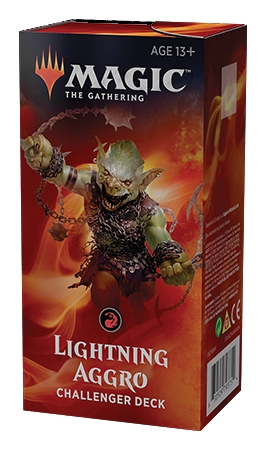
4 Fanatical Firebrand 4 Ghitu Lavarunner 4 Runaway Steam-Kin 4 Viashino Pyromancer 4 Goblin Chainwhirler 1 Rekindling Phoenix 2 Lava Coil 1 Banefire 4 Shock 4 Lightning Strike 4 Wizard's Lightning 2 Experimental Frenzy 22 Mountain Sideboard 4 Fight with Fire 4 Lightning Mare 4 Diamond Mare 3 Fiery Cannonade Again, we have another solid foundation without a ton of cash value, although the Rekindling Phoenix is sitting around $18 as I write this. The big holes here, are obviously Light Up the Stage, and Skewer the Critics. Another $10 or so will get you those cards. You could chose to add another Phoenix or two, but I’m not sure that’s necessary for the deck to run well. Last year’s Challengers had an RDW entry, and so does this years. Both are powerful, effective decks, that will leave you time to snack between rounds. DEADLY DISCOVERY
1 Vraska, Relic Seeker 4 Merfolk Branchwalker 4 Llanowar Elves 4 Wildgrowth Walker 4 Seekers' Squire 2 Jadelight Ranger 3 Ravenous Chupacabra 1 Plaguecrafter 2 District Guide 3 Golgari Findbroker 2 Find // Finality 4 Cast Down 3 The Eldest Reborn 2 Woodland Cemetery 4 Golgari Guildgate 1 Overgrown Tomb 2 Memorial to Folly 8 Forest 6 Swamp Sideboard 4 Duress 2 Arguel's Blood Fast 3 Golden Demise 2 Reclamation Sage 2 Kraul Harpooner 2 Murder The Golgari deck brings us our first, and only Planeswalker of the bunch, and oddly enough, it’sthe 6 CMC version, and not her cheaper 4-drop sister. We’ve also got our first and only Shock Land, along with a pair of Checklands. There’s some good value here, but upgrading this particular deck will be more expensive than with the first two. At a minimum, you’re going to want another pair of Jadelight Rangers, and perhaps a Vraska, Golgari Queen. You may also want 2-3 Assassin’s Trophy for removal. Then you’re going to want to smooth out your mana base with 2-3 more Overgrown Tombs, and 2 Woodland Cemeteries. More value to start, but definitely way more cost to bring it up to spec. ARCANE TEMPO
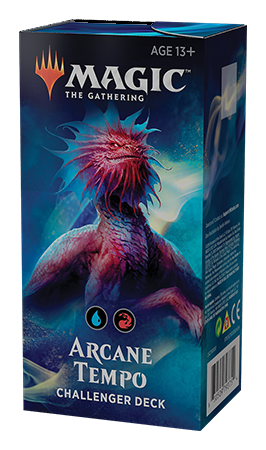
4 Goblin Electromancer 4 Crackling Drake 2 Murmuring Mystic 1 Arclight Phoenix 2 Niv-Mizzet, Parun 4 Chart a Course 4 Lava Coil 1 Beacon Bolt 4 Opt 4 Radical Idea 4 Shock 2 Dive Down 1 Blink of an Eye 1 The Mirari Conjecture 3 Sulfur Falls 4 Izzet Guildgate 8 Island 7 Mountain Sideboard 1 The Mirari Conjecture 1 Beacon Bolt 3 Negate 3 Entrancing Melody 3 Fiery Cannonade 2 Shivan Fire 2 Disdainful Stroke Well, if you’re looking for the best bang for your buck, here it is. MSRP on these is $30, and as I write this, Arclight Phoenix is selling for $30 on the low side. Channel Fireball and Star City Games both have them listed as “Out of Stock” at the moment. Probably waiting to see how the pricing shakes out over the next few days. The Niv-Mizzets are like $12. The Sulfur Falls are around $10, The Mirari Conjecture, and Entrancing Melodies are around $3 apeace, hell even Cracking Drake is like a $1. This deck is PACKED with value.
But much like the Golgari deck, it’s going to cost you quite a bit to bring up to full power. You need 4 Phoenix to make this a really competitive deck. The solution? Buy Four of them! Seriously, if you can get these for MSRP, buy four. It’s well worth the money. Arclight Phoenix is on a TEAR in Modern right now, and buying 4 of these gets you a long way toward building the Modern version. Even if the deck gets nerfed - most likely with a ban of Faithless Looting, the rest of the deck is still worth it, and Phoenix probably will still be seeing play in some way or another for a long time. I wouldn’t be surprised to see it even show in Legacy. This is a golden opportunity to spend $120 and get yourself 80% of the way into Modern. That is a bargain. Overall, I think Wizards did a great job, here. I would have liked to have seen multiple copies of Arclight Phoenix and maybe one or two Assassin's Trophy in their respective decks, but that's really just asking for extra value in what's an already value-packed product. Honestly, It might be hard to get the Arcane Tempo deck for MSRP. I'm hoping that the fact that these will be available on Amazon for a reasonable price, will keep the price from bloating too far out of whack, but Star City Games already has them listed at $50. You may have to shop around. I’m Tweeting now @23rdPlayable. I’m also occasionally streaming on Twitch as 23rdPlayable. And, as always, you can find me on Facebook in the MTG Arena Players group, where I’m a mod. Have fun, Play on, and Be kind to one another.